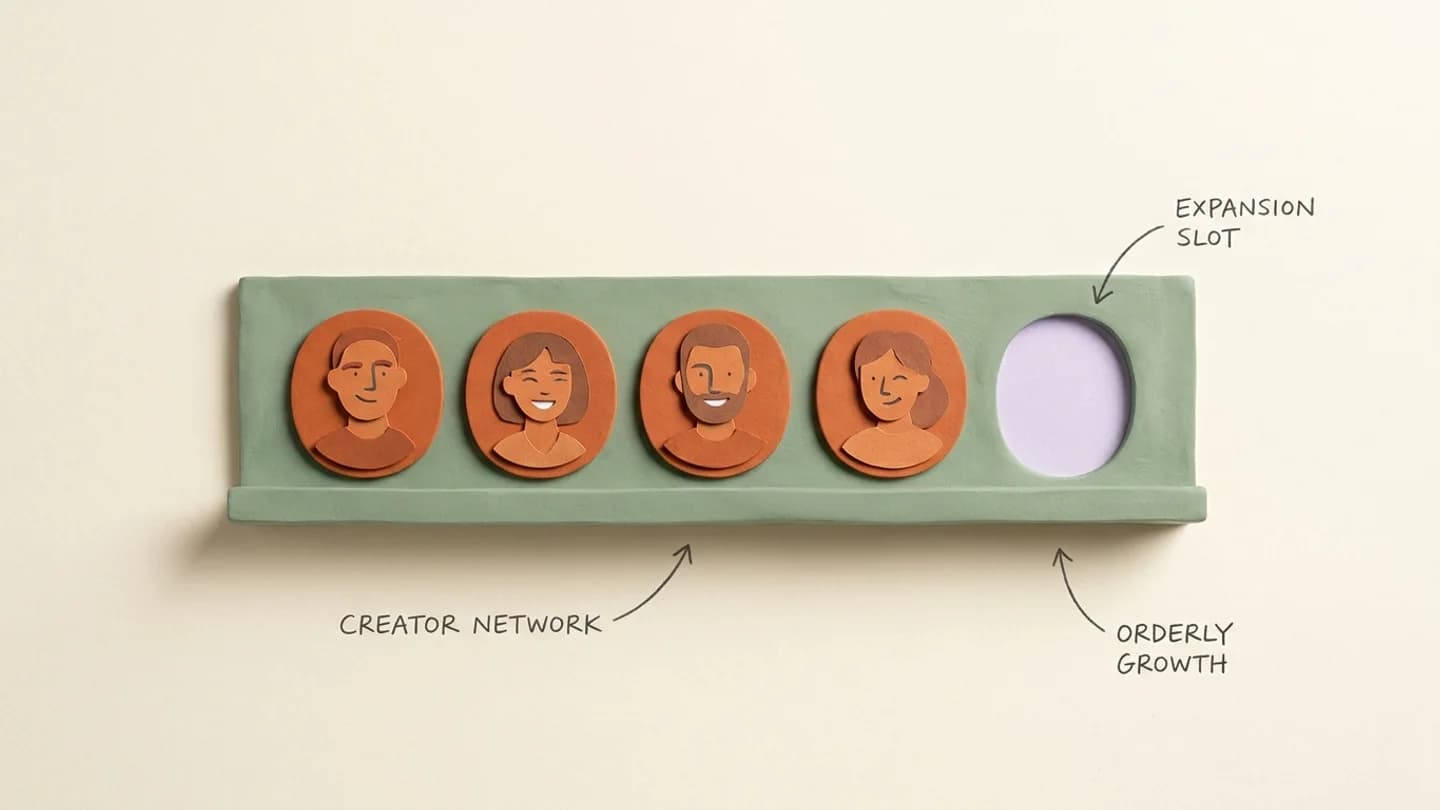
Agency capacity is the amount of work the team can deliver reliably, not just the number of accounts a software plan supports. Forecast editing, coordination and approval workload before adding another creator.
What to take away
- Use actual time records from comparable work.
- Include revisions and coordination.
- Keep a buffer for ordinary disruptions.
Measure the current workload
Track a representative period of planning, editing, account management and reporting. Include the hidden tasks: chasing files, clarifying briefs and recovering failed publications. Excluding them makes the agency appear more efficient on paper than it is in practice.
Group work by creator and format. One creator may film clean material independently while another needs extensive direction. A simple average across the whole roster can hide the specific workload a new client will create.
Find the limiting stage
The bottleneck might be editing, creator approvals or account management rather than publication. Adding a scheduler subscription does not create more review hours. Likewise, hiring an editor may not help when footage arrives late.
Map how work queues at each stage. A growing pile of completed edits waiting for review suggests a different problem from a growing pile of raw footage. Fix the constrained stage before increasing intake.
Build a conservative forecast
Use a simple scenario calculation. If a proposed creator needs six edits at an illustrative 45 minutes each, that is 4.5 editing hours before briefs, revisions and coordination. Add those tasks separately instead of assuming the edit estimate includes everything.
- Expected recurring deliverables.
- Production time per format.
- Review and revision allowance.
- Account management and reporting time.
- Software account and publishing allowances.
- A buffer for ordinary disruptions.
Expand in a controlled step
Add a manageable amount of work and review whether the forecast was accurate. Watch turnaround time and error rate, not only billed revenue. A roster can grow while service quality quietly deteriorates.
Update the intake plan when actual work differs from the estimate. Kinuly’s account allowances help plan the Instagram software side, but the agency still needs enough people and creator cooperation to prepare good content. Capacity planning brings those constraints together before a promise is made.
Use a two-scenario intake worksheet
Prepare an expected-workload scenario and a busier scenario with extra revisions or delayed assets. Compare each with the team’s available hours after current commitments. If only the optimistic scenario fits, reduce the proposed scope, adjust the start date or add capacity before signing another delivery promise.
For example, a creator may usually need one revision pass but occasionally need a new opening and caption after review. Include the observed frequency and effort in the estimate rather than calling all revisions exceptional. Review the forecast after the first delivery cycle and use the difference to improve the next intake decision.
Questions, answered
Does a 100-account software plan mean I can manage 100 creators alone?
No. Account allowance and human delivery capacity are separate. Forecast production and coordination work independently.
How much buffer should an agency keep?
Choose a buffer based on observed revisions, absences and variation. This guide does not assume one percentage fits every team.