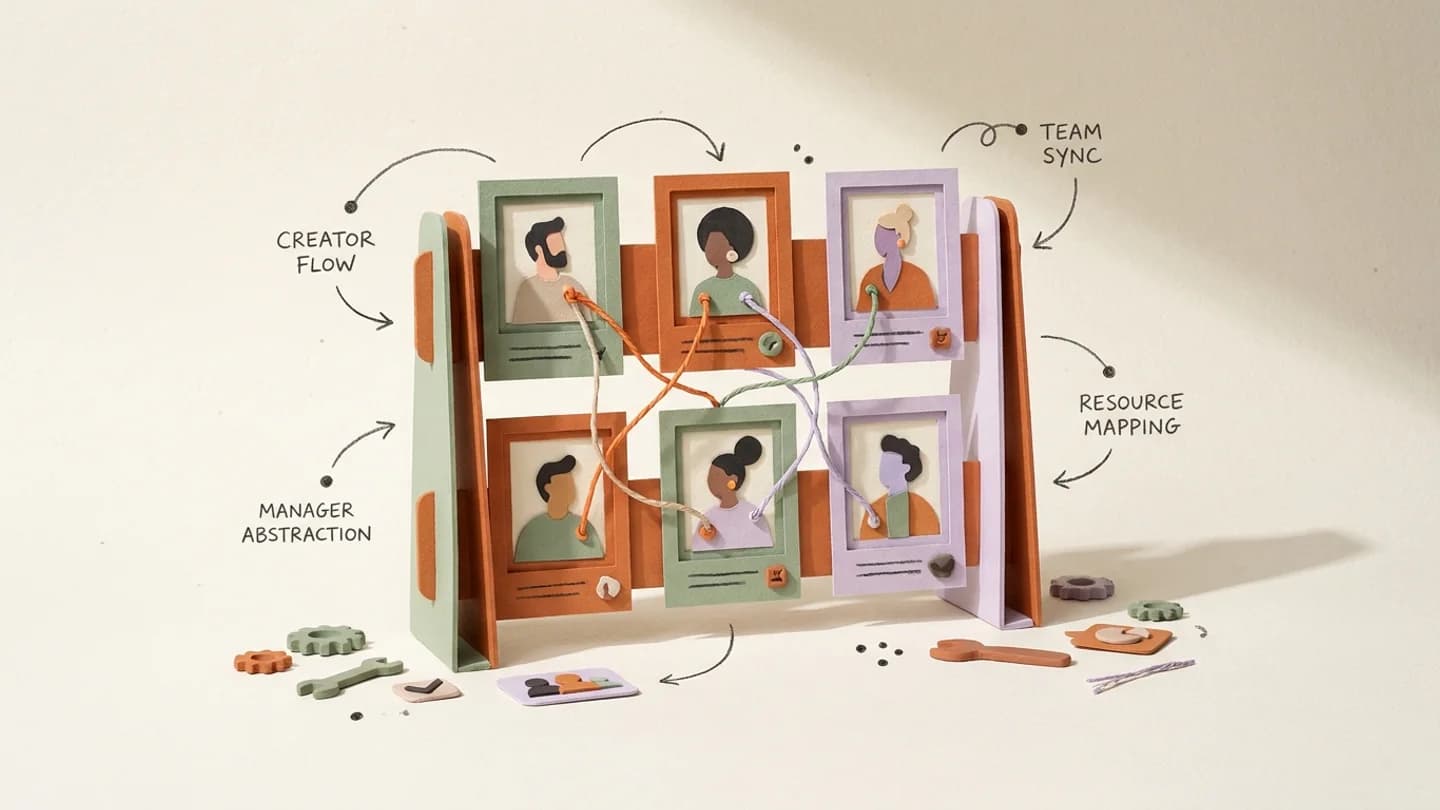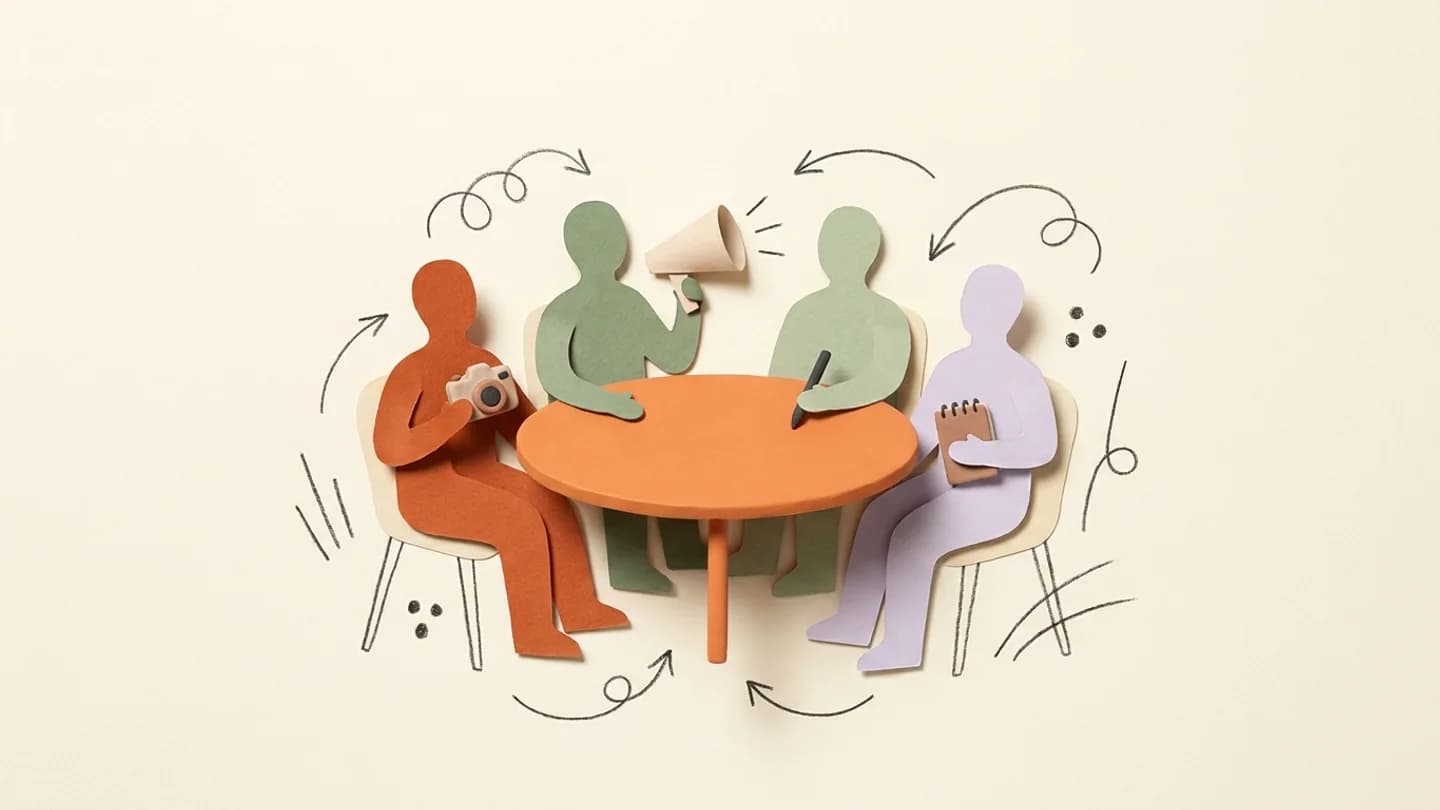
An OFM team needs clear ownership of client communication, content production, publishing and reporting. People can hold several roles, but every recurring task should still have one accountable owner.
What to take away
- Separate responsibility from software permission.
- Name a backup for time-sensitive work.
- Document handovers instead of relying on memory.
Map the delivery chain
Follow one post from idea to published result. Who writes the brief, obtains footage, edits, reviews, schedules and verifies success? Put a name or role beside each step. Gaps often appear at handovers rather than inside the obvious production tasks.
A small agency may assign several steps to one person. That is workable if the responsibilities are explicit. As the team grows, the map makes it easier to delegate a complete task rather than scattering small requests across several people.
Keep account management distinct
The account manager maintains the creator relationship, resolves priorities and communicates changes. An editor should not have to negotiate commercial scope through revision comments. A publishing operator should not be the sole person deciding whether a sensitive creative change is acceptable.
Give the creator a clear contact for decisions. Multiple staff members sending conflicting instructions can make a simple workflow feel chaotic even when everyone is working hard.
Match access to the job
Software permissions should reflect the actions a role needs. A teammate preparing posts may not need billing or ownership controls. Review access when someone changes duties, not only when they leave the agency.
- Account manager: priorities, creator communication and delivery tracking.
- Editor: approved footage and edit requirements.
- Publishing operator: account checks, schedule and publication status.
- Analyst: consistent definitions and performance review.
- Owner: commercial decisions, access policy and escalation.
Design a usable handover
A handover should state what is complete, what is waiting, where the files are and what happens next. “Please take over this creator” is not enough information for a colleague to operate safely.
Name a backup for scheduled work and account incidents. Keep the backup’s instructions short and current. A good process continues through holidays and staff changes without requiring someone to reconstruct the last month of chat history.
Example: a two-person agency
In a small team, one person might own the creator relationship, briefing and final schedule review while another handles editing and prepares the publishing records. Both can understand the whole process, but the final account check still has a named owner. If the first person is unavailable, the backup follows the documented review rather than improvising the creator’s boundaries.
Once coordination becomes the bottleneck, delegate a complete responsibility such as collecting weekly footage and updating the asset record. Avoid hiring someone into an undefined “help with everything” role and expecting accountability to emerge automatically. Revisit the role map when the number of creators or the service scope changes.
Questions, answered
Does every role need a separate employee?
No. Separate the responsibilities first; hire or delegate when workload justifies it.
Who should approve a new team member’s access?
Use the workspace owner or another explicitly authorized administrator, following the agency’s access policy.