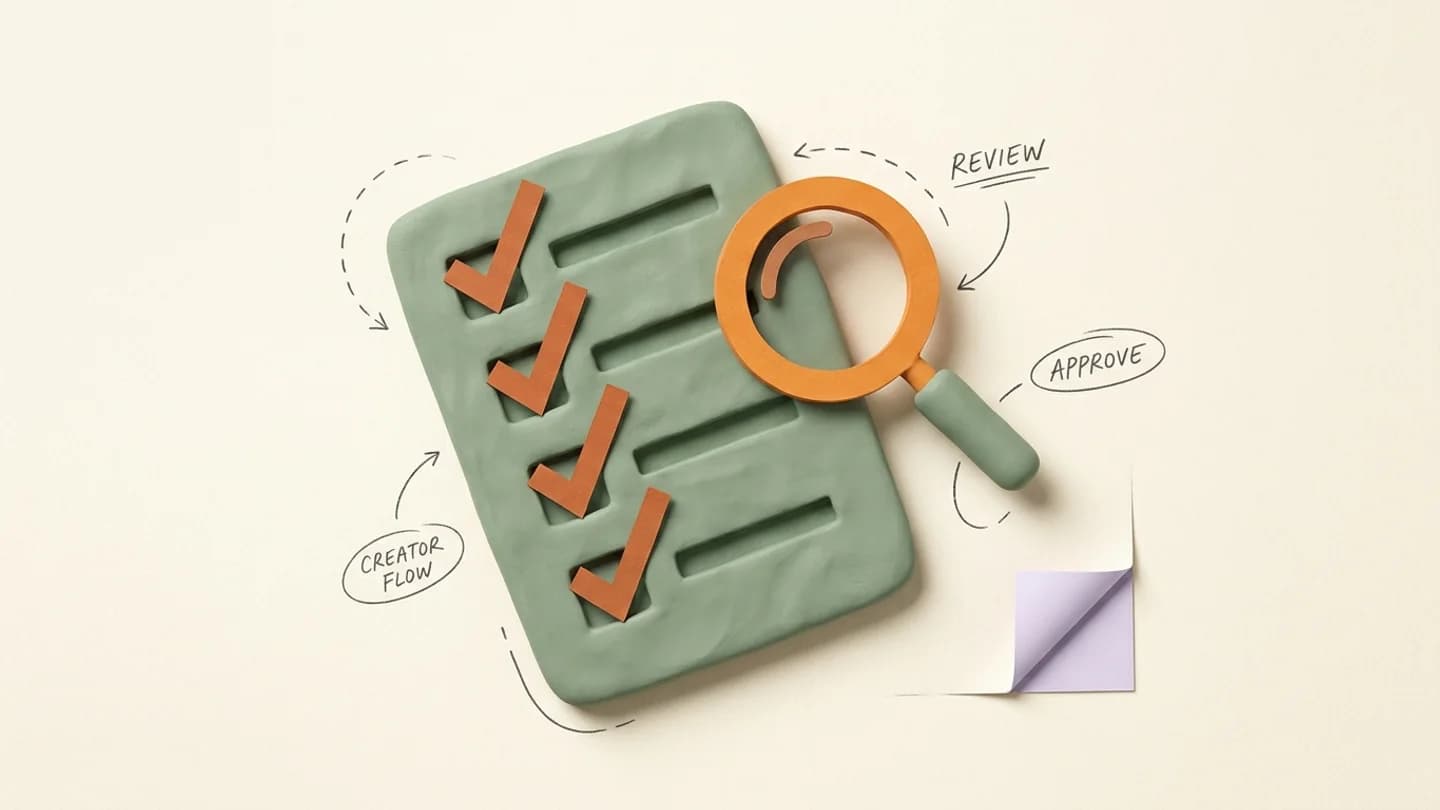
An Instagram account audit is a structured review of the profile, content history, access and measurement setup. It should end with a short prioritized action list, not a long document of observations with no owner.
What to take away
- Check account health and access before blaming content.
- Review the profile and the content as one experience.
- Assign a next action to each important finding.
Check identity and account access
Start with the exact handle, owner and professional-account setup. Confirm that the connected account is the intended one and that authorized people can complete recovery or reconnection when needed. A roster often contains old handles, duplicate records or accounts no longer managed by the agency.
Record anything requiring the creator’s action. Keep those requests separate from editing tasks so a content operator does not spend hours trying to solve an ownership problem they cannot control.
Read the profile as a new visitor
Look at the profile image, biography, pinned content and destination links. Can a new visitor understand the creator’s public identity quickly? Do the most visible posts support that identity, or do they suggest several unrelated directions?
Avoid judging the profile only by aesthetics. A beautiful biography that does not explain why someone should follow is not necessarily effective. Also check that names, dates and promises are accurate and that links go where their labels imply.
Review content by format
Group a recent sample into recurring formats. For each group, note the premise, opening, visual quality, caption and intended audience. Compare results at a similar age where possible. One unusual viral post should not define the entire strategy.
- Identify formats the creator can produce consistently.
- Flag clips with unclear openings or weak audio.
- Check whether captions match the video.
- Note topics that attract the wrong audience.
- Keep examples of both strong and weak executions.
Inspect the publishing process
Check whether missed posts came from missing assets, slow approvals or technical failures. If the same issue repeats, fix the process before raising the posting target. A calendar cannot compensate for an absent filming routine.
Review a few actual published posts against their briefs. This can reveal cross-account errors, outdated captions or crops that were not visible in the editing preview. The audit should follow the work all the way to its public result.
Prioritize a small set of changes
Rank actions by impact, effort and dependency. Reconnecting an account that cannot publish is urgent. Improving asset names is easy. Redesigning the entire content strategy may require a creator discussion and a longer test.
End with three to five actions, each with an owner and a review date. Save the baseline before making changes so the next audit can evaluate progress. Without that record, a team may repeatedly discover the same issue and call it a new insight.
Questions, answered
How often should an agency audit accounts?
Use a fuller review when onboarding or changing strategy, with shorter recurring checks for access, publishing and recent performance.
Does an audit prove an account is shadowbanned?
No. A decline in reach has multiple possible explanations. Review account status and evidence before assigning a cause.